
No, Direct Instruction Will Not Have a Renaissance at Alpha School
I'm sorry, last post and then I'm done writing about this

I’ll start with where Alpha School and I agree.
I think schools should care more about how much students learn. Too often, time and energy are spent on things only loosely connected to learning. School is for many things, but learning should be the priority.
I also agree that students at Alpha School are learning faster than typical students in a traditional school — public or private. I got a bunch of responses to my post yesterday arguing that it’s all selection. I disagree. We can argue about the size of the effect or how well it might scale, but I think it’s real. Alpha School has figured out ways to get their students learning faster. We disagree on the causes. Alpha School says AI and technology, I say school culture and motivation. Still, there’s something here.
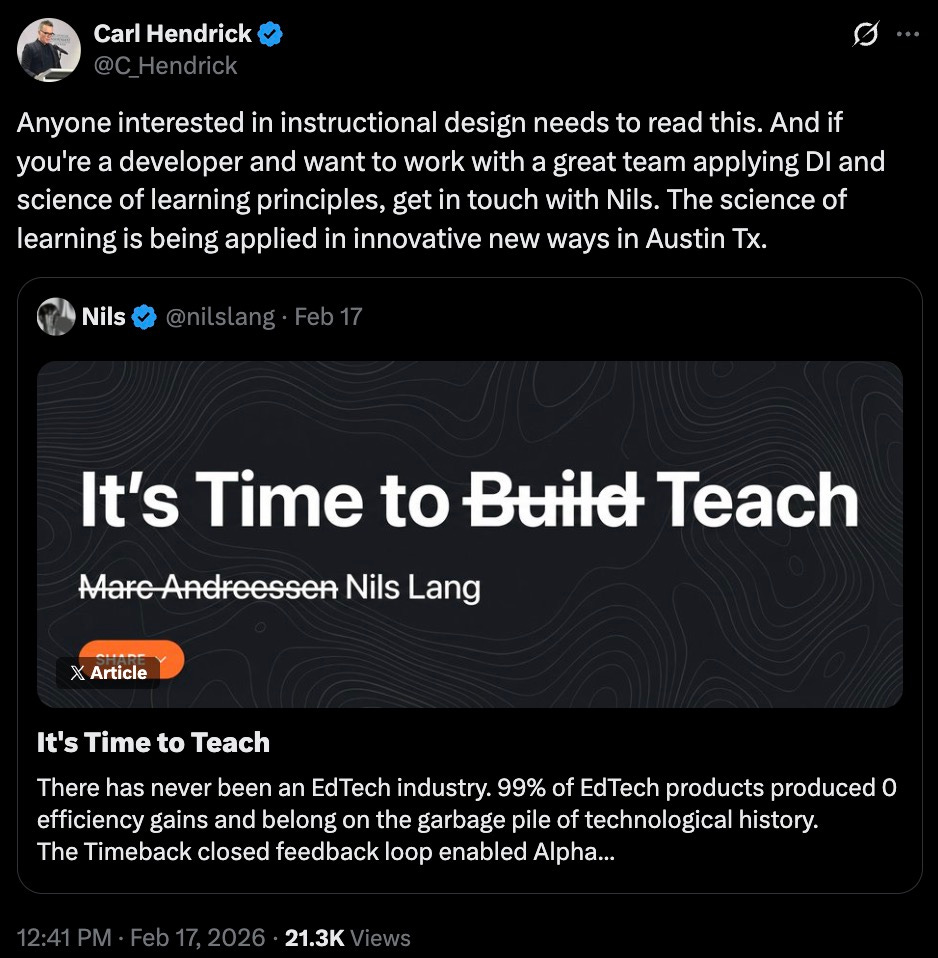
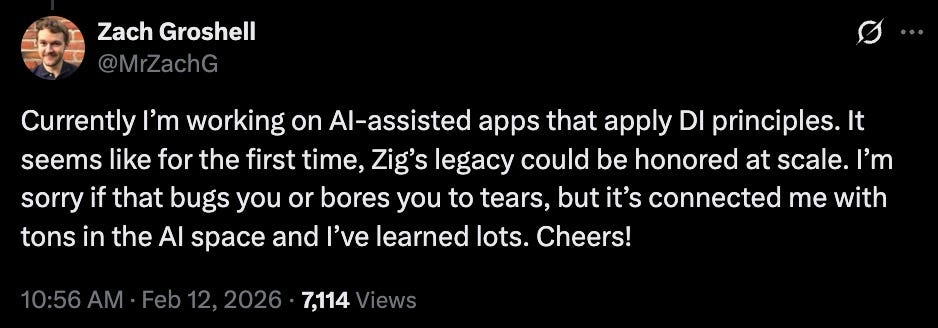
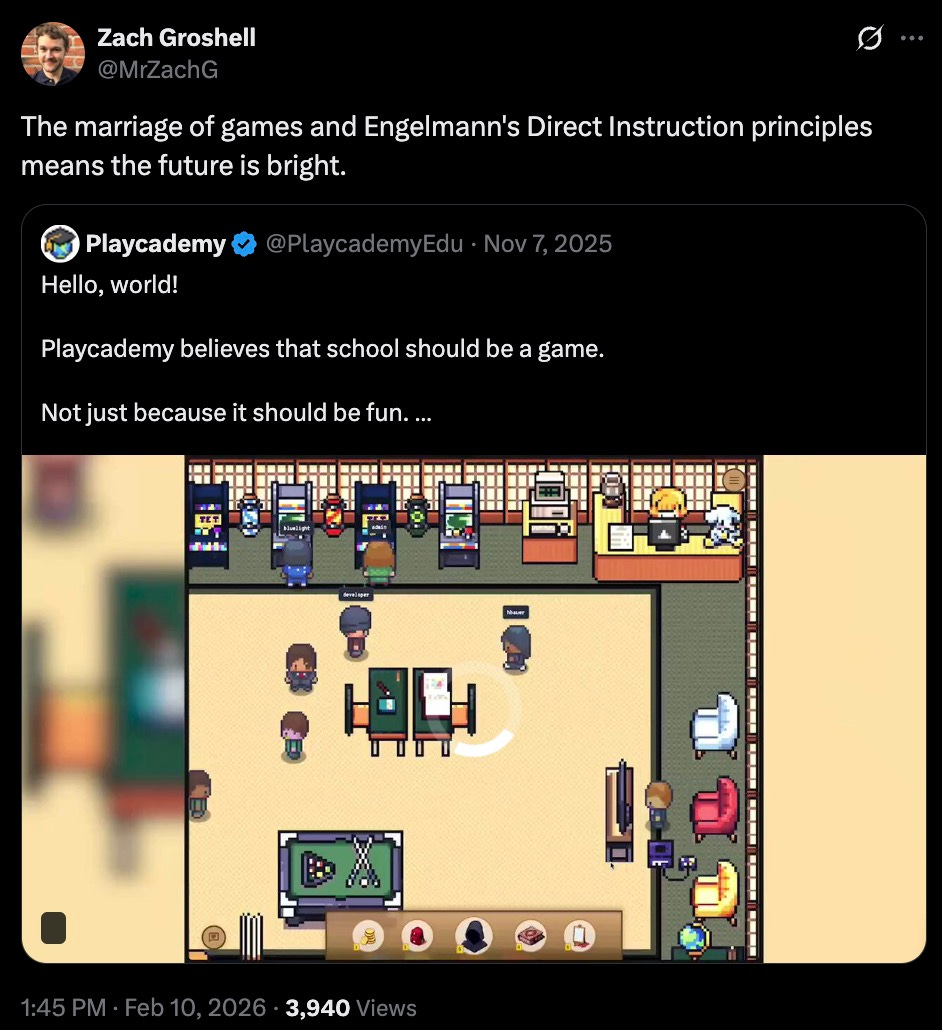
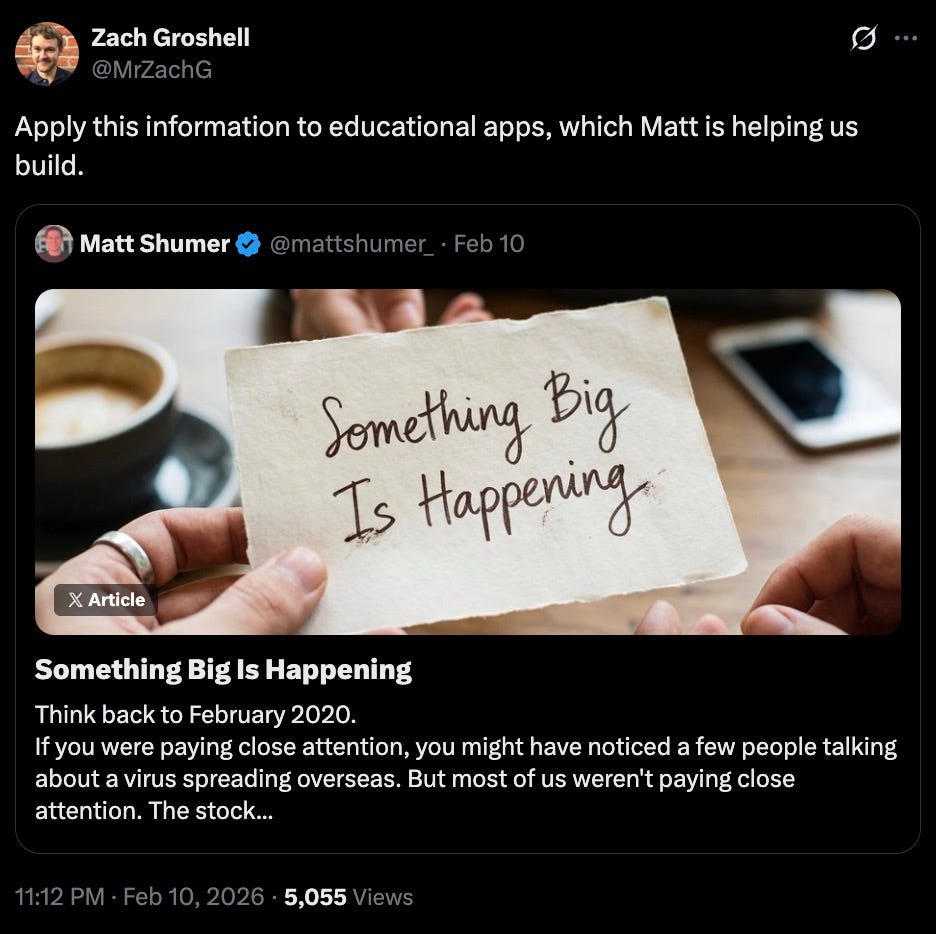
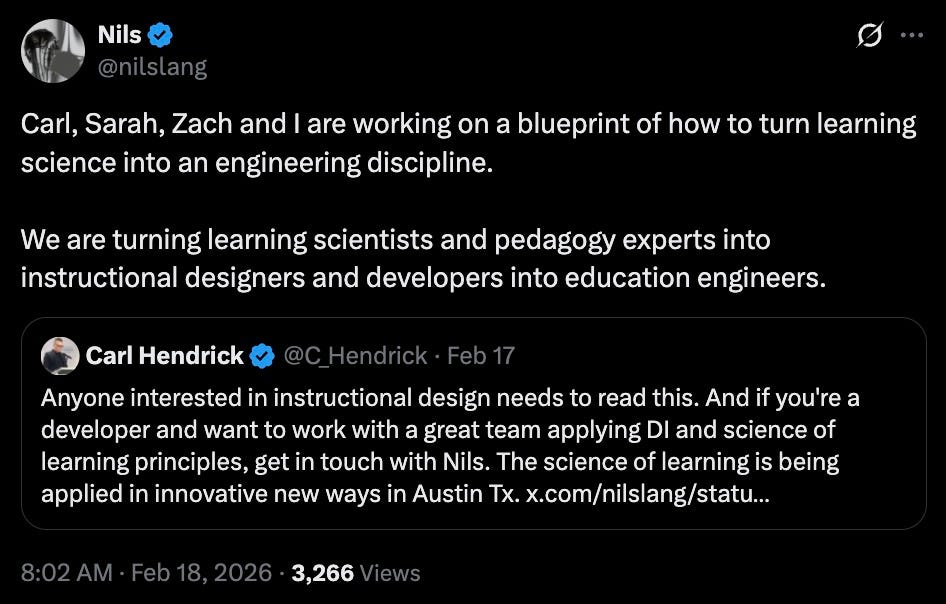
I wrote a few days ago about Zig Engelmann. He was the driving force behind the Direct Instruction (DI) curricular programs. I have learned a ton from how he approached analyzing the content schools teach and exhaustively testing his curricula with real students. Apparently Alpha School is a fan as well. Mixed in with their big claims about technology are a bunch of vague allusions to incorporating Engelmann’s ideas:
I need to share a big note of skepticism.
Here is Zig Engelmann teaching a group of students at the preschool he ran:
Some of the math they’re doing is hard for many middle schoolers. These students are in kindergarten. I know people have very different reactions to this guy. It’s very traditional teaching. Go read my post for a lot more nuance. I don’t want to get into the weeds on Direct Instruction here.
Engelmann cared deeply about learning. He wanted to accelerate the learning of as many students as possible. But the specific students he chose to teach matter. He started this preschool with Carl Bereiter. Here is Bereiter writing about their process:
We chose the lowest-performing school in the area as our recruitment site, but we wanted to recruit children for whom the prognosis was especially poor. How do you do that with children who had not yet had a chance to fail in school and without giving a lot of tests? Our makeshift solution was to select children whose older siblings were identified by the school as having serious academic problems. The result was a dozen preschoolers who ranged from bright but difficult to one who essentially could not answer any questions.
(source)
Engelmann was obsessive about testing his programs. His attitude was simple: every student can learn with the right instruction. If students don’t learn, the instruction must be flawed. Here is a nice summary from a recent article on the Direct Instruction approach:
DI programs are thoroughly evaluated for effectiveness during and after design and development... Using an iterative testing model, the logical and structural elements are tested with students to make sure they work. If students don’t understand something, it flags a problem in the program. The problem is identified, the instruction altered, and the sequence is tested again. When a full draft of an instructional program is ready, it is field tested in schools representing diverse student demographics and geographical settings.
(source)
Every student can learn. Engelmann chose to test his programs with “children for whom the prognosis was especially poor.” He taught those students himself. By testing and refining his programs with these children, he maximized the likelihood that the resulting curriculum would actually work for every student.
Alpha School is a $40,000-a-year private school. Here is the truth: Alpha School will not be the place where Engelmann’s ideas have a renaissance. Testing curriculum at Alpha School is like testing a new medication on the healthiest patients first.
I’ve written before about the 5 percent problem in education technology. Edtech works great for students who are motivated to use it well. Edtech companies run a study testing their program. The study shows that kids learn more than some control group. The catch is, they only include students who “use their program as recommended.” In many studies, that’s around 5 percent of students.
5 percent isn’t some theoretical limit. It’s just a ballpark number representative of the current research. It seems to me that Alpha School has increased that number. Motivation is the key variable, and Alpha School has designed their school culture and system for personalized learning to maximize motivation. I bet that more than 5 percent of students can be successful at Alpha School, and for those students the program accelerates their learning faster than what they would achieve in a typical school. Is it 20 percent? 50 percent? We have no idea right now. It’s clear that many Alpha School families are happy with the program. That’s great. It’s a private school. Do your thing, make families happy. My question isn’t whether Alpha School works. My question is who it works for, and what that means for the rest of us.
Here’s my core prediction: Alpha School will not be the place where we finally unveil the holy grail of education technology, where 100 percent of students can learn from a computer. Alpha School will not be the place where Engelmann’s ideas scale to reach every student. Developing curriculum is an empirical science. Designing great curriculum requires endless tinkering and testing and revision. If that testing happens at a $40,000-a-year private school, it simply will not scale to everyone. Alpha School might do great things for a slice of students. That’s cool. But let’s make sure the claims are in line with reality.1
If Alpha School is serious about being “the future of education,” the solution is simple. I’m seeing these allusions to Engelmann. Follow in his footsteps. Partner with a struggling school where outcomes are poor. Test the curriculum there. Refine and iterate with the students who are most likely to struggle. If Alpha School isn’t interested in doing that, I’m not going to pay much attention to the big claims. Go be a successful private school. Live and let live. I’ll head back to my classroom to do the best I can with boring traditional whole-class instruction.
I’ll note that there’s a section of the edtech world that is honest and straightforward that their products are designed to help the most academically capable students. I appreciate that! I know public schools struggle to challenge talented students, I see it every day. I’m happy those products exist. I respect them for being honest about who they’re designed for. If Alpha School marketed themselves that way, I wouldn’t be writing long posts about all this.
I taught high school for a long time and retired a couple years ago. The one indisputable result of the NCLB earthquake and subsequent aftershocks was the heightened tendency of various players to make big claims that, upon closer inspection, turned out to be essentially hype. But it's actually funny - in kind of a nice way - that 'direct instruction' is having a moment.
Very much appreciate the thoughts and discussion. I'm interested in how we are defining learning. What exactly are the kiddos in the video "showing off"? It feels like given a question asked in a particular way, a few of them can say the words they were taught to say. Is that learning? What would we be comfortable claiming the kiddos in the video have learned? At Alpha, some kiddos can score very highly on a thing called MAP. Alpha is equating learning with scoring highly on MAP. Is that ok?