
How I Trained My Memory
And what training it taught me about learning

I think teachers should be obsessed with learning. And not just learning in general, but learning in the specific way we ask students to learn in school: taking a skill, breaking it down into small pieces, practicing the pieces, and integrating them into something new, so that you can do something you couldn’t do before. I don’t often do that in my life. Any chance to learn something new becomes this little laboratory in my mind, a chance to learn but also to reflect on the nature of learning.
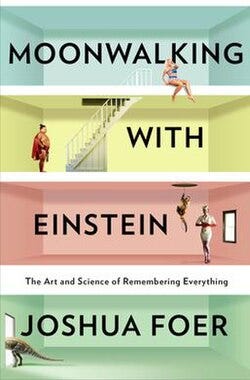
I read the book Moonwalking with Einstein a few months ago. It’s about the world of competitive memory competitions. It’s a great book, I highly recommend it. I decided to train my memory for one of the challenges described in the book: memorizing long lists of numbers. Today, if you give me a list of 100 digits and 5 minutes, I can memorize them and repeat them back to you.
I’m going to share how I trained my memory, and a bunch of thoughts on how this experience connects to learning more broadly.
Memory Training
Step 1: Make a PAO list. Take the two-digit numbers 00 to 99. For each number, give it a Person, an Action, and an Object (a PAO). There are a few ways to do this. I just picked a bunch of triplets that create nice vivid images for me. A few examples are 00: Gandalf (person) slamming down (action) a staff (object), 71: Morpheus (person) offering (action) a red pill (object), and 18: the Statue of Liberty (person) holding high with one hand (action), a flaming torch (object). I’ll put some notes about the nitty-gritty details in a footnote.1
Step 2: Memorize your PAO list. I used flashcards for this, and committed everything to memory. That meant 600 total flashcards — for instance, for Morpheus (71) the six cards were 71 on the front → each of Morpheus, offering, and a red pill on the back, and then each of those three on the front → 71 on the back. These need to be rock solid, so if I need the object for 71 I instantly think of a red pill. Similarly, if I think of a red pill, I need to know right away that it’s the number 71.2
Step 3: Build a few memory palaces. A memory palace is a sequence of locations that you will attach PAOs to. For instance, you might imagine walking through your house, and pick out a series of locations along that walk. First your coat rack as you walk in the door, then the countertop next to the fridge, then the sink, then the dining room table. The goal is to have a sequence of locations that are rock solid in memory, that you can move through the list sequentially and put images in each location of the memory palace. Each location needs to be distinct, and the locations and the order need to be the exact same every time. I like to run, so I took three of my favorite trail runs and turned them into memory palaces with specific locations along each route.3
Step 4: Practice taking a set of six numbers and translating it into a vivid image in your mind. So if the six numbers are 007118, I would think of the person for 00 (Gandalf), the action for 71 (offering), and the object for 18 (a flaming torch). So my image is Gandalf offering a flaming torch. I imagine the flaming torch in Gandalf’s hand. I see him look at me, and the fire from the torch is dancing in his eyes. His hand is flat and the torch is somehow perfectly balanced. He’s sitting in that red chair from The Matrix. The goal is to make the image as vivid as possible, so it’s easy to remember.
Step 5: Pick a short sequence of numbers and install a series of images in your memory palace. So for 18 numbers, I would divide the 18 into three chunks of 6. For each chunk I would come up with an image, like the image of Gandalf above, and install it in my memory palace. The first two numbers correspond to the person, the next two the action, and the final two the object. So I start my run, look to the left at the beaver dam across the stream and on the dam is Gandalf offering a flaming torch. The goal is to take the sequence of images, each image corresponding to 6 digits, and install those images in your memory palace. Then, to remember the numbers, you walk through your memory palace. As you walk through the memory palace, you translate the image at each location back into numbers.
Step 6: Extend this to larger and larger numbers. If you’re successful at, say, 18 numbers, try 30 numbers. If you’re unsuccessful, go back and improve your fluency with the PAO system, practice translating numbers into vivid images, and practice the sequence of locations in your memory palace. Repeat until you get to 100.4
This might seem like a silly way to spend your time, but I highly recommend trying it. If you can spend 15 minutes a day working through the steps above, I bet you can make some good progress and memorize decent strings of numbers within a month. But the real benefit is that this type of memory training is a fantastic window into your own mind. Watching yourself learn something complex is a great way to better understand learning. Here are a bunch of things I learned about learning from going through this process.
Learning About Learning
In many subjects there exists a body of knowledge that needs to be committed to memory in order to do more complex tasks. In this case, I needed to commit my 100 PAO triples to memory. I needed to be able to instantly recall the action for 64 without casting about in my mind. Every domain is a bit different, but there’s nothing wrong with committing stuff to memory, and it makes using that stuff to do more complex tasks much easier. If you want to memorize 100 numbers, you have to be fluent in the PAO system. I can’t be thinking, “ok 64, umm, 65 is Eminem, who comes before Eminem? It’s, umm, oh it’s Katniss Everdeen.” That’s too much cognitive load. I need to think of 64 and instantly know that it’s Katniss Everdeen aiming a flaming arrow.
Building on that idea, often the best way to get better at something isn’t to practice the thing, it’s to practice the component skills on their own. When I was struggling to memorize longer strings of numbers, the best way to make progress was to go back to my flashcards and improve my fluency with my PAO system or practice creating vivid images with sets of 6 numbers, rather than going through the whole process of trying to memorize long strings of numbers.
To learn a large body of knowledge, the best approach is to introduce new content in small, manageable chunks. I actually had to restart my flashcards for the PAOs partway through. I tried to add too many cards at once, got overwhelmed, and wasn’t making any progress. I started again, only introducing 5-10 new cards at a time and practicing them until I had them down before adding any new ones. Adding new ideas in small chunks makes the learning process smoother, keeps me motivated through steady progress, and minimizes cognitive overload.
It’s much easier to remember things when they’re connected to something else. That’s the whole premise of this memory system. I connect the number to a person, action, or object. Then those three are attached to each other in a vivid image, like Cersei Lannister skateboarding in a locker full of aliens, which is attached to a location in my memory palace, which is attached to the locations before and after, which are attached to places in the world I have lots of experience with. All of those connections make this memory thing possible. Connections are structured lots of different ways in school learning, and this gave me a lot more appreciation for how helpful those connections can be. This also makes memorizing something by repeating it over and over again seem incredibly inefficient. Don’t memorize through brute force, find ways to make connections and simplify.
Practice works best by varying the practice tasks. When I did my first pass on the PAO system, I practiced one direction: being given a number, and retrieving the person associated with that number. 11 = A’ja Wilson or 86 = Tommy Lee Jones. Then, once I had those down, I mixed in more cards — given the number, retrieve the action or object (11 = dunking; a basketball, 86 = being worshipped by; a locker full of aliens). Then I went backwards, given the person, action, or object and producing the number. Then, once I got pretty good with those, I would give myself a six number combination, and practice coming up with a vivid image for the person-action-object triple. I could feel the difference embedding those memories with a variety of practice, rather than just repeating the same format each time. I generally avoid the phrase “rote learning” because it doesn’t seem to have a consistent meaning in education. But this is a good example of what rote learning means in a negative sense. If I only ever learn cards in one direction, that learning isn’t very flexible. If I use that learning in lots of different ways, it’s much more likely to stick and be useful in the future.
Effortful thinking is key to learning. Effortful thinking is a bit tough to define. The key idea is that processing something in depth and with lots of detail leads to better learning. In this case, more vivid images lead to more durable learning. All that effort of imagining Thanos mopping a giant pile of money, the look on his face, the bills on top getting blown in the breeze, and the water making the bills on the bottom soggy, helps the memory to stick. This same idea applies in education: effortful thinking leads to better learning.
Distractions matter more when your working memory is stressed. When I’m trying to memorize 100 digits by installing images in my memory palace and then retrieving them, I have to be somewhere 100% distraction-free. No music, nothing happening around me. It’s one of the most mentally taxing things I’ve ever done. This gave me a lot of empathy for my students. Some students really struggle with noisy environments. It’s easy to underestimate the impact of those distractions.
Success is a great motivator. I had a really hard time with the first two steps of the process. I ran out of steam putting together my PAO list after the first 70 or so, and a few times while I was memorizing the initial 100 people I would introduce too many new cards at once and have to backtrack. It was frustrating to feel like I had put a bunch of effort in but hadn’t gone anywhere. Then, once I got past the first 100 cards and started improving my fluency and coming up with images, I suddenly had a ton of momentum. Even just memorizing 12 numbers (2 images) felt impressive, and I was excited to keep practicing and see myself making progress.
If you don’t use it, you lose it, but you can probably relearn it quickly. I actually did all of this a few months ago, though I’m just getting around to writing about it now. I went to try a round as I was writing this and realized that I couldn’t remember some of my PAO associations. I hadn’t used them in a while, so they had faded. But when I reopened my flashcards and spent a bit of time practicing, it all came back quickly. I think this is an important principle of school learning. Sure, most of my students will forget most of what I taught them. That’s true for any human: if you don’t use something you’ve learned, it will fade. But if you learned it well to begin with you can also relearn it quickly and without too much effort. That’s important! One purpose of education is to give people choice in what they want to do with their lives. Even if you don’t remember much of school math years after high school, you have access to more opportunities because you could relearn it quickly if you needed it.
Most learning doesn’t transfer. I now have this clever party trick I can pull out (as long as I’ve been refreshing my skills). But that party trick didn’t improve my memory beyond the specific PAO technique. I still go to the grocery store and forget what I need to buy, or tell myself I need to remember to grade that assignment and forget to do it. Unfortunately, most skills don’t transfer very well. That doesn’t mean learning is pointless, but it does mean teachers need to be cautious about trying to teach abstract ideas like “critical thinking” or “problem solving.”
Final Thought
Maybe I’m just a giant nerd, but I loved doing this. It wasn’t easy. That’s kindof the point. It gave me a ton of empathy for students. Learning takes a lot of effort. That effort is taxing. And that effort only feels good if there’s a clear payoff, knowing something you didn’t know before. Seriously, I highly recommend giving it a shot. It was fascinating peering into my own mind, watching the learning process unfold, hitting all these little barriers and working through them. Training my memory has been great professional development. And hey, you might have a bit of time away from work coming up… If you give it a shot, let me know how it goes!
You can find lots of different advice online for how to create a PAO system. You can organize by theme, or use something called the Major System to help make the items for each number. I didn’t use any of those. In the end you just have to memorize your PAO system, and so all of those ways of organizing PAOs didn’t seem important. I also picked PAOs that would be particularly memorable and vivid for me, rather than prioritizing some other system. In some cases I stretched the meanings of “person,” “action,” and “object.” As long as they are clear and distinct in your mind, it will work. If you’d like to see mine, it’s in this spreadsheet. The empty rows are friends or coworkers. The second tab formats the list into something you can cut and paste into flashcard software. Be cautious about stealing these wholesale — they make sense to me because I’m familiar with the people/characters. If you can’t generate a vivid image in your mind of an entry, replace it with something that
I used Brainscape as my flashcard software. Lots of people out there will recommend Anki. Anki is designed to only show each card once per day, and to show 20 new cards each day. That wasn’t ideal for me: it’s helpful to be able to give yourself more practice in a day with this system. The biggest issue with Brainscape is that it introduces too many cards at once, which can feel overwhelming. I fixed this by only uploading in 5-10 card increments until I got the first 100 down, and then adding the rest in larger chunks as I got more fluent with the system. Once I finished with the flashcards, I used a bit of Python code to generate random digits for practice. You can use this link if you like.
I recommend three memory palaces. Having only one memory palace is limiting because you can’t reuse the memory palace too quickly. If you use a memory palace, install a bunch of images, and then try to use it again and install new images right away, you’ll likely get confused between the old and new images. My rule was to never use a memory palace more than once in a day. This also reinforces the idea that the best way to improve typically isn’t to try to memorize long lists of numbers over and over again, but to practice PAO flashcards, practice making full PAO images, or practice the memory palace itself (I would sometimes make mistakes by skipping a location in the memory palace).
Something that seems funny after going through this process. Lots of schools hold some sort of pi memorization competition for pi day (March 14th). I’ve watched plenty of students memorize digits of pi using the brute force method, by just repeating the digits to themselves over and over. This method isn’t an instant replacement, you have to learn your PAO system first. But using this system I’m confident that I could memorize a few hundred digits of pi without any problem if I had a few days and put some effort into it. I haven’t done that because I would need to come up with a new memory palace (if I want to retain pi then it’s no good for other things), and because I just can’t get myself to care about memorizing pi. But it seems darkly funny, watching students memorize random digits using an inefficient method.
Thanks for writing this Dylan - super interesting! I’m currently using Anki to memorise (for no good reason) the curriculum for a senior class I’m going to be teaching and it really is mentally effortful! I’ve ordered that book, thanks again. :)
Fantastic article and I'm thrilled to meet another teacher experimenting with and enjoying the classic methods in their own life! You inspired me to lock in my own PAO system a bit more (I'm less efficient. I have a character for each 00-99, but not as good with the action and object. I often forget them and just image the two characters together in the location, somtimes with one character on the shoulders of another which does create a fun image sometimes- Barak Obama on the shoulders of my brother in law for instance). I've had great fun of using this for small benefits like knowing credit card numbers, knowing some phone numbers, door codes (easy) etc. I have many questions and would love to talk to you further. Here are some threads I'm wondering about:
Can memory arts change one's relationship to learning in a way that is undervalued by our biases about learning? Here I'm wondering about how our biases about learning are shaped by the enlightenment and a culture of literacy. Literacy is amazing of course and it's what I teach. But, a culture oriented around the printing press created assumptions about learning. Maybe there is something about memory arts that changes what learning means, that values a type of embodied learning more, and that puts a premium on the value of synthesizing information to create realtime context.
I'm wondering about relationship to something and how memory arts might be something that creates an enjoyment in learning? You mentioned that you enjoyed it. That's been my experience. I've largely noticed my students to enjoy it in the doses that I've experimented with in my class. A lot depends on the container. I have also experienced a type of burn out w memory arts or a type of godlike syndrome of I WANT TO KNOW IT ALL.
But it does seem true that knowing things about something...that is knowing them in your heart and your body and in an immediate way can create a type of enjoyment of something. My main curiosity about memory arts is in this category. For example, using memory arts to know characters and allusions relevant to the odyssey helped me to enjoy that epic poem more. It created a certain allowing for enjoyment.
Even just the fact that I recite many of the poems that we read now to my students from memory... I feel that has changed the vibe around how I'm teaching the poem. It's changed me in relationship to those poems. And of course it shows a different attitude towards poetry for my students...one that I think invites them in to a different kind of relationship with the poems. I'm not sure what I'm scratching at, but maybe you can help me if any of these threads seem interesting to you?
I'm broadly curious about the viability of memory arts in school contexts. The more I've learned about their history, it feels more like a shocking omission.